



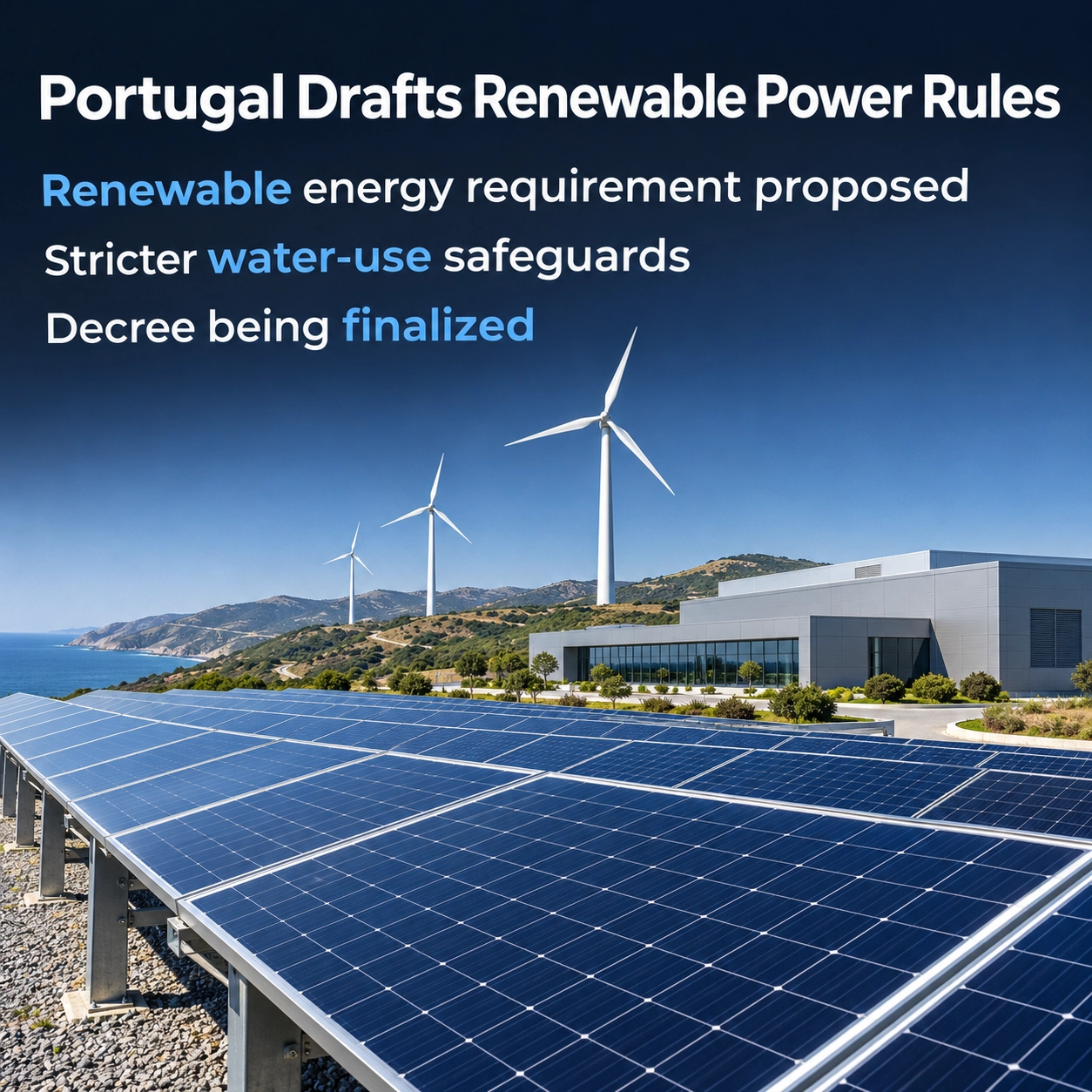
The push reflects both the country's clean-power advantage and mounting local concern over the sector's footprint. Carvalho pointed to Portugal's abundant solar, wind and hydropower resources, noting that more than 80 percent of the country's electricity came from renewable sources in 2025, according to European Commission data. That gives operators a viable path to meeting an all-renewable mandate, though it would still mark a significant tightening of requirements compared with most European markets.
The rules arrive as Portugal's data center market expands rapidly, with more than 2.6GW of capacity currently under development — a sharp increase from the existing base of 36 operational facilities, with another ten under construction or in planning. Lisbon dominates the market, hosting 25MW of operational capacity and almost 1.4GW of planned capacity. The growth has fueled growing pushback from local communities. In 2023, a corruption scandal linked to the Start data center campus brought down the Portuguese government and led to the resignation of then-Prime Minister António Costa. Despite the scandal, the 1.2GW project is still expected to proceed.
Portugal is following neighboring Spain, which proposed in August that data centers source at least 80 percent of their electricity consumption from new renewable generation on an hourly basis, before revising the rules in October to raise the threshold of facilities subject to the requirements from 1MW to 10MW. The coordinated moves signal that renewable-power mandates and water-use restrictions are becoming a defining regulatory theme for European data center development, raising the bar for operators planning new capacity in the Iberian Peninsula and potentially reshaping site selection and cooling design across the region.