



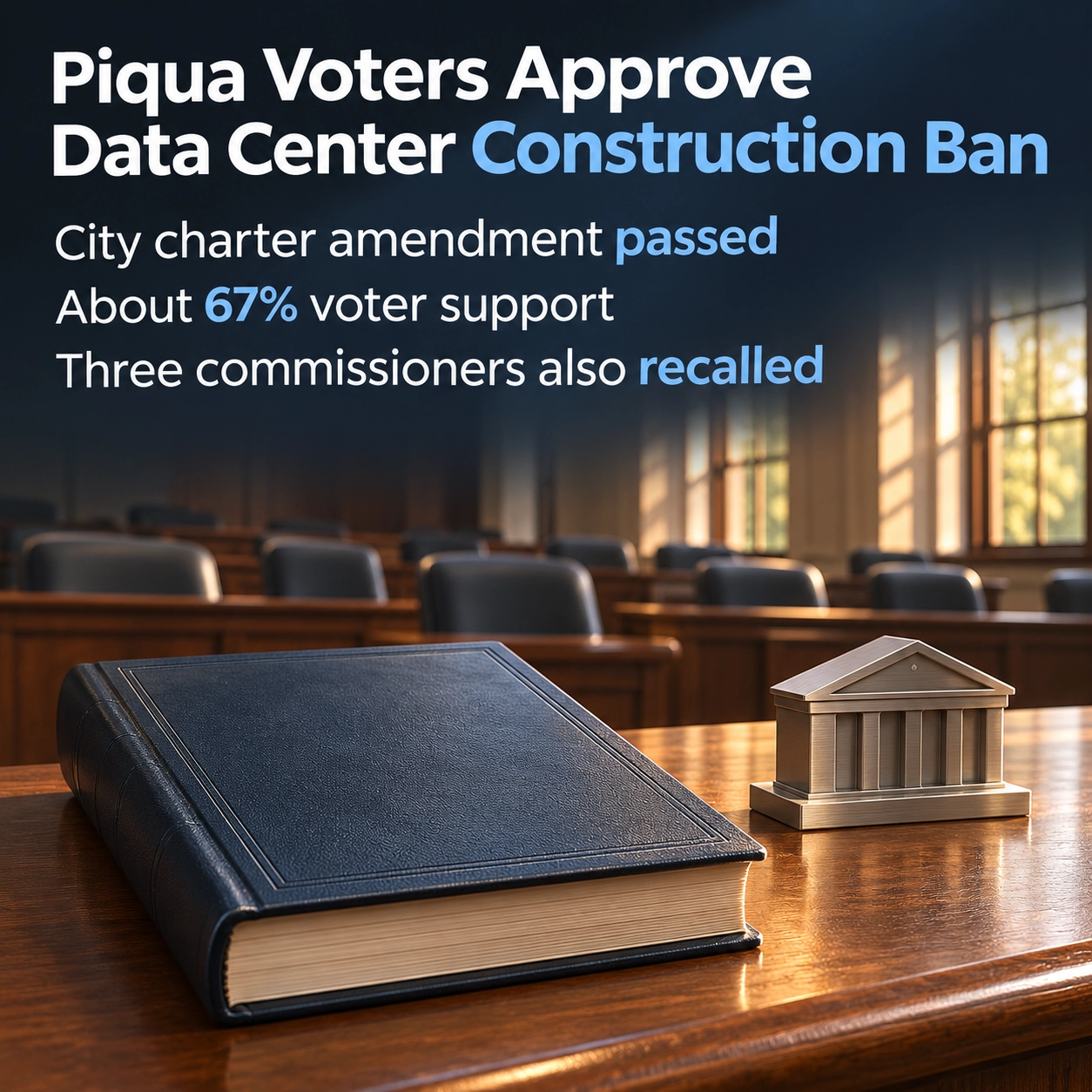
"I think there's a lot of displeasure from the city residents, in general, about how the data center was implemented," said Piqua voter Marty Pollock. "It kind of felt like it was done sneakily, got under the radar." The recall results reflected that discontent, with Walker and DeBrosse set to be replaced by Damon Wilson and Kim Heisler, who ran unopposed, while Jim Sheats narrowly defeated Alexander Hessler to succeed Vetter, according to the unofficial tallies.
While data centers dominated the local political conversation, voters also weighed in on other ballot measures. The Tri-County Board of Mental Health Tax Levy, a renewal, passed with 69% of the vote, and the Miami County Park District Levy, an additional measure, passed with 59%. Voter Cara Fry said the two levies were her top priorities, adding that she wanted elected officials to address affordability by lowering grocery and gas prices. Gary Wagner, another voter, similarly emphasized border security and tax relief, while Pollock said he hoped officials would treat the outcome as feedback from constituents. "Actually listen to what I think the voters are wanting to say," he said.
The Piqua vote adds to a growing pattern of local pushback against data center projects nationwide, as communities scrutinize the land use, energy demands and approval processes associated with such facilities. For developers, the result signals that community engagement and transparent siting procedures are becoming critical to project viability, while for local governments it highlights the political risks of advancing infrastructure projects without broad public support.