


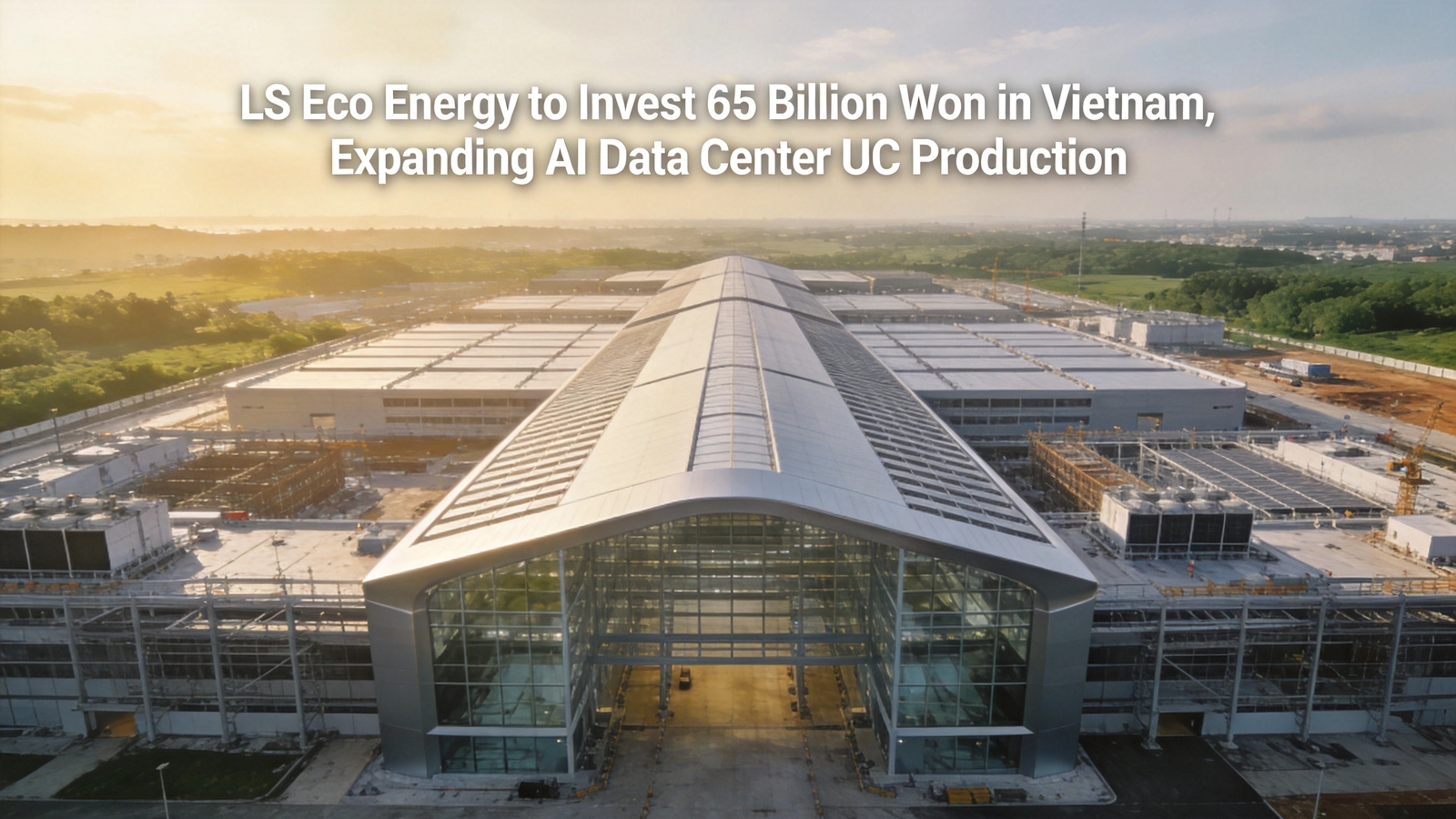
LSCV was selected as the production base because it can utilize idle space at its existing factory, reducing initial capital expenditure. Relatively low labor and utility costs in Vietnam are also expected to give the facility a cost-competitiveness advantage in global markets.
The move could meaningfully improve LS Eco Energy's profitability. Unlike conventional wire and cable products, whose margins are sensitive to copper price fluctuations, ultracapacitors are high-value-added products with significant technological barriers to entry. The company expects the ultracapacitor business to generate higher margins than its existing operations, potentially lifting overall profitability as the new segment scales.
Ultracapacitors are energy storage devices that rapidly store and discharge electricity to compensate for momentary power shortfalls in hydrogen fuel cell power generation systems. As demand for AI data centers increases, investment in hydrogen fuel cell power systems is also expected to grow, supporting demand for ultracapacitors as a complementary component in those installations.
LS Eco Energy plans to begin mass production and deliveries in April 2027, and aims to generate approximately 150 billion won in annual revenue from the ultracapacitor business alone by 2030. The company is also considering further investment depending on the scale of future global orders. "We will develop UCs as a new growth engine and expand our business into high-value-added products for AI data centers, including bus ducts," said Lee Sang-ho, CEO of LS Eco Energy.
The announcement comes as LS Eco Energy reported record-high consolidated revenue of 351.5 billion won and operating profit of 22.2 billion won in the third quarter of 2026, according to preliminary results. Revenue rose 51% year on year, while operating profit increased 50.2%, as the company continues to expand its business in response to growing demand for power infrastructure.