



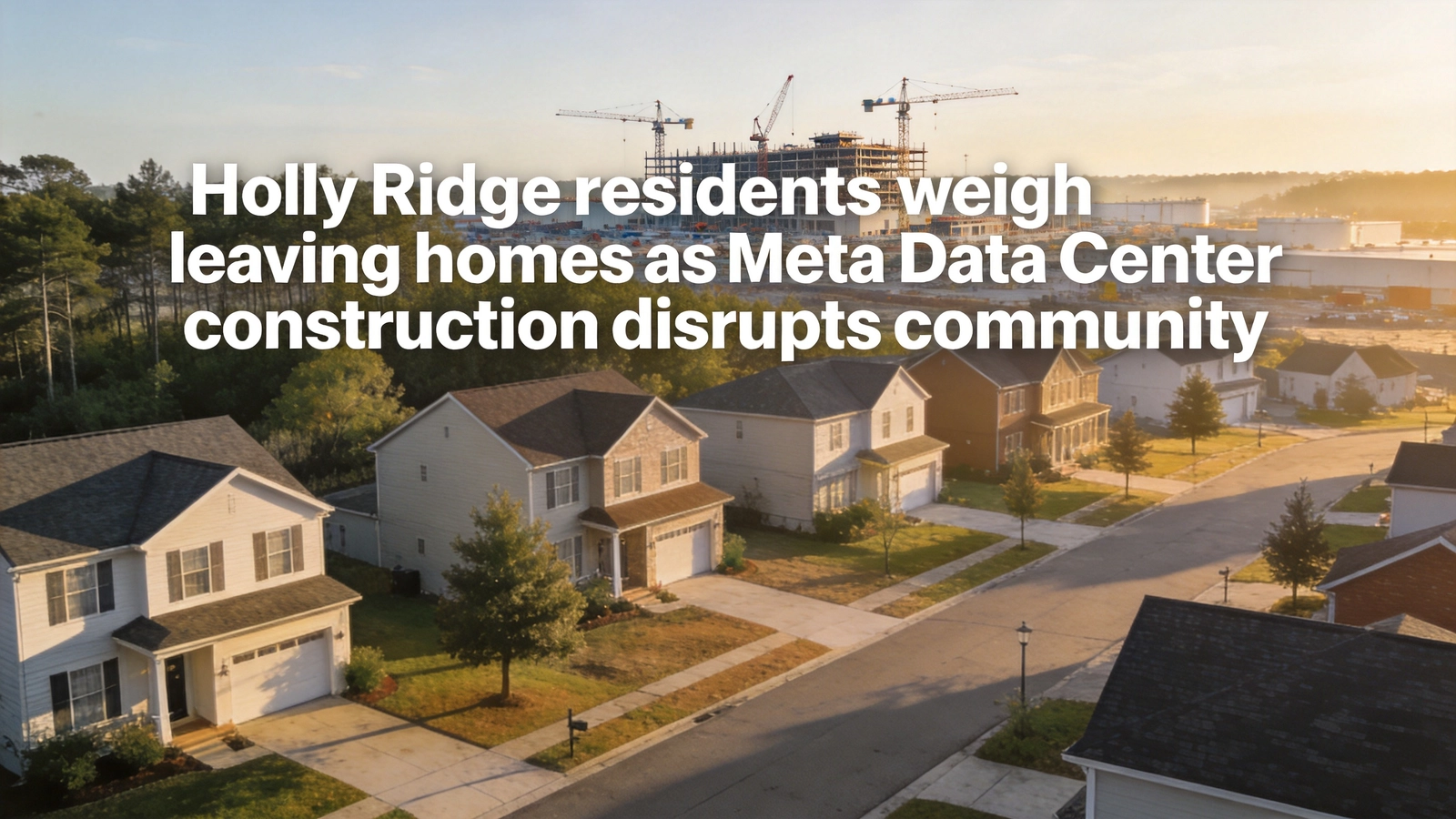
Randy Dove, who has lived on his property for more than five decades, said the congestion directly interferes with his daily routine, noting that drivers do not give residents enough space to exit their own driveways. "They don't give no respect to let you out of your own driveway that we've been using our driveway for 50-something years," he said, adding that he now plans to move. Meta has stated that all project drivers must follow strict traffic regulations or face removal from the job site, and the company said crews actively manage dust levels and maintain close communication with local leaders.
However, several neighbors say those measures fall short of addressing their day-to-day disruption. Lisa Hopkins, a resident, said the community has seen little response to its concerns despite the company's outreach efforts, including school scholarships. "We haven't been expecting anything because they haven't seemed to show any concern on what they've done," she said. "Yeah, they're giving the school scholarships and stuff and that's great, but what have they done for the residents right here dealing with this traffic and noise every day?" Hopkins and Randy Dove both said the ongoing disruption is forcing an outcome they never anticipated: abandoning their roots. "We've done a lot here and we've made it home," Hopkins said. "And the thought of having to move and start over, it's sad. Of course we want to get out of here now because it's not going to get any better." Dove added that conditions are likely to worsen as construction continues, saying, "Who wants to live amongst all this here? It ain't even got started yet because it's going to get worse as it goes throughout time."
The dispute highlights the broader challenge facing data center developers as they expand into rural and suburban areas: securing local acceptance amid concerns over traffic, noise, infrastructure strain, and quality of life. How Meta and other operators manage community relations during construction could shape permitting and local opposition in future projects, particularly as demand for AI and cloud capacity continues to drive site selection across North America.